Sacroiliac (SI) joint pain: causes, exercises and treatment
Based on NHS physiotherapy guidance.
Reviewed by Harvir Ubhi, HCPC-registered physiotherapist. Last reviewed 28 September 2026.
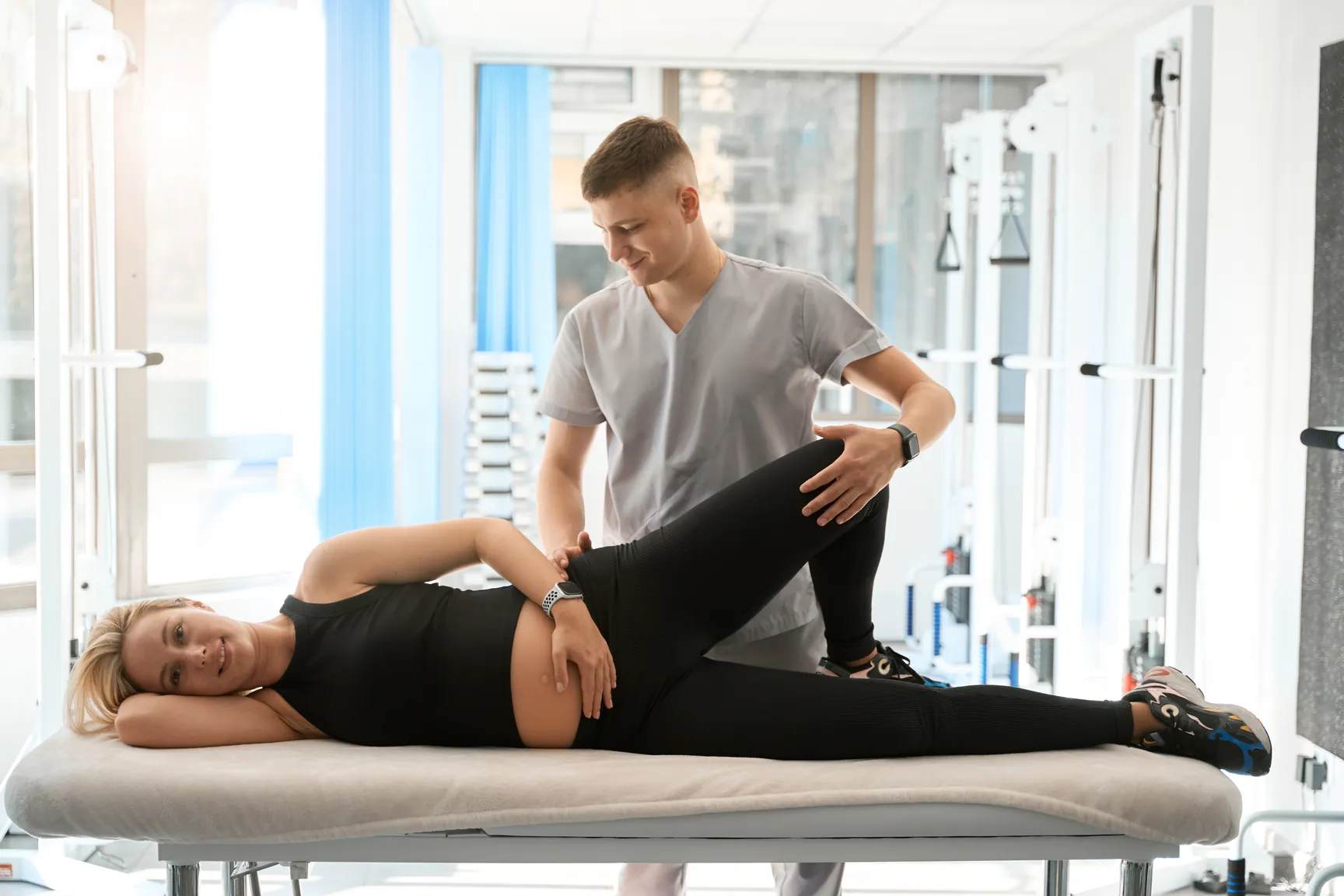
The short version: your sacroiliac (SI) joints sit at the very bottom of your spine, where it joins your pelvis. When they're painful, you feel it low in your back and often in your buttock. It's usually not serious and usually settles with physiotherapy, painkillers and time. Keep active, and avoid long spells of rest.
Where the sacroiliac joint is, and where it hurts
You have two SI joints, one on each side, linking the base of your spine to your pelvis. Their job is to pass weight between your legs and your spine, so they're built to be very stable and move very little. That stability is also why they're not a common cause of back pain.
When they are the problem, the pain sits low in your back and can spread into your buttock or down into your leg.
What causes sacroiliac joint pain
- pregnancy, from hormones and the extra load on your pelvis
- a fall or other injury
- differences in the shape of your spine, such as scoliosis
- osteoarthritis
- inflammatory back pain, known as spondyloarthropathy
- rarely, infection, gout or a tumour
Could it be inflammatory back pain?
The NHS leaflet says to talk to a GP or physio if you've had back pain for more than 3 months and at least 4 of these apply:
- you're under 40
- the pain came on gradually
- movement makes it better, but rest doesn't
- you wake in the second half of the night with it, and it eases when you get up
- your back is stiff in the morning for more than 30 minutes
- you have buttock pain
- anti-inflammatories such as ibuprofen help
- you or your family have had psoriasis, inflammatory bowel disease or uveitis, or your family has had axial spondyloarthropathy
- you've had inflamed tendons, such as the Achilles, or swollen joints
3 sacroiliac joint pain exercises from an NHS leaflet
These come from the Tyneside NHS physiotherapy leaflet. Alongside them, walking, cycling and swimming are all good for SI joint pain.
- Stand evenly. Stand upright and gently shift your weight until you find your natural balance. Keep your weight equal on both legs rather than taking it off the painful side.
- Knee to chest. Lie on your back with your knees bent and feet on the floor. Lift the knee on your painful side towards your chest, hold behind the knee and draw it in. Hold 5 seconds. Repeat 10 times.
- Pelvic tilt. Lie on your back with your knees bent. Tilt your pelvis so your lower back arches off the floor, hold 5 seconds, then flatten your back into the floor and hold 5 seconds. Repeat 10 times.
To rest comfortably: lie on your good side with your bottom leg straight and your painful-side leg supported on pillows.
Treatment, in the order it usually happens
- 1
Stay active
Keep walking, cycling or swimming, and avoid long periods of rest.
- 2
Exercises and painkillers
The exercises above, plus painkillers. A pharmacist can tell you what's safe for you.
- 3
Physiotherapy
A physio works out whether the SI joint really is the source, since other back problems can feel similar, then builds your exercise plan.
- 4
Injections or rhizolysis
If symptoms carry on: an injection into the joint, or rhizolysis, which heats the small nerves with radiofrequency.
- 5
Surgery
For long-term pain that hasn't responded, surgery such as joining the joint (fusion) may be discussed.
Seeing a physio for SI joint pain
You don't need a GP referral to see a private physio. In London a first appointment usually costs £70 to £130. Tell us your symptoms and a HCPC-registered physiotherapist on our team will match you with someone who treats low back and pelvic pain regularly.
It's free, and most people hear back within 24 hours.
Sacroiliac joint pain questions
What is the treatment for sacroiliac joint pain?
For most people: staying active, painkillers, the right exercises and time. The Tyneside NHS leaflet says it usually gets better with physiotherapy, painkillers and time. If it doesn't, injections, a procedure to heat the nerves (rhizolysis) or, rarely, surgery can be discussed.
Can pregnancy cause sacroiliac joint pain?
Yes. Pregnancy hormones and the extra load on your pelvis can make these joints painful. If you're pregnant, mention it to your midwife or GP.
Is SI joint pain serious?
Usually not. The NHS leaflet describes it as usually self-limiting, meaning it settles on its own. Rarer causes like infection exist, which is one reason pain that isn't improving should be checked.
What shouldn't I do with sacroiliac joint pain?
Don't rest for long periods, which the leaflet specifically warns against. When standing, keep your weight even rather than leaning away from the painful side.
Related: lower back pain · piriformis syndrome · back pain physios in London compared
Call 999 or go to A&E if you have back pain and:
- numbness around your bottom or genitals
- you can't pee
- you've lost feeling in one or both legs
- you can't control when you pee or poo
- it started after a serious accident, such as a car crash
These can be signs of cauda equina syndrome, which needs treatment within hours.
Sources
- Tyneside Integrated Musculoskeletal Service (Newcastle upon Tyne Hospitals and Gateshead Health NHS Foundation Trusts), Sacroiliac joint pain (revised June 2025). tims.nhs.uk
- Milton Keynes University Hospital NHS Foundation Trust, Sacroiliac joint radiofrequency denervation. mkuh.nhs.uk
- NHS, Slipped disc. nhs.uk/conditions/slipped-disc
- London physio prices: PhysioMatch London survey of 20 clinics, September 2026
This page is general information, not medical advice. If you're worried about your symptoms, speak to a GP, call NHS 111, or in an emergency call 999.