Back pain exercises: 5 to do at home
Exercises from NHS physiotherapists at Guy's and St Thomas' in London.
Reviewed by Harvir Ubhi, HCPC-registered physiotherapist. Last reviewed 29 September 2026.
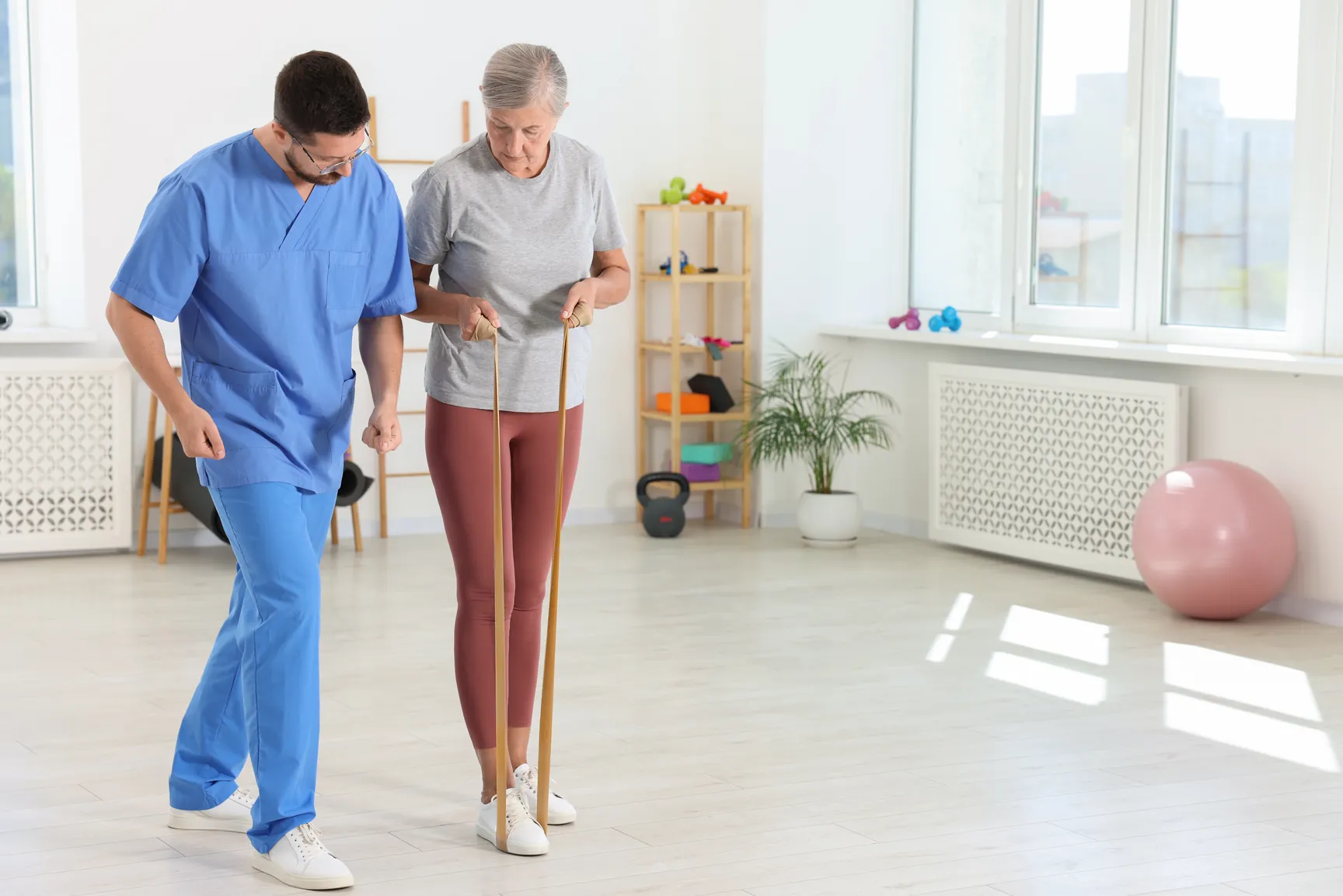
The short version: moving helps back pain more than resting does. Five simple exercises used by NHS physios at Guy's and St Thomas': knee rolls, knee hugs, back extensions, the bottom to heels stretch and squats. Start with a few of each and build up gradually. Some discomfort is normal, but if an exercise makes your pain worse, stop it and ask a physio or GP.
Why exercise helps
Back pain often improves on its own within a few weeks, though it can sometimes last longer or keep coming back. What you do in the meantime matters. The NHS advice is to stay active and carry on with your daily activities, and the Chartered Society of Physiotherapy says exercise has been shown to be the most helpful treatment for back pain.
These exercises are for ordinary lower back pain. If your pain runs down one leg, it's more likely to be sciatica: try our sciatica exercises instead.
5 exercises for lower back pain
- 1
Knee rolls
Lie on your back with your knees bent and your feet flat on the floor. Keeping your back against the floor, slowly let your knees drop to one side. Bring them back to the middle, then roll them over to the other side.
- 2
Knee hugs
Lie on your back with your knees bent. Bring one knee up towards you and hug it to your chest, with your arms around the back of your knee. Do one knee and then the other, or both together.
- 3
Back extensions
Lie on your front and prop yourself up on your forearms, so your chest and head are lifted. To go further, put your hands flat on the floor and push your upper body a little higher.
- 4
Bottom to heels stretch
Start on your hands and knees with your back straight. Slowly ease back until your bottom rests on your feet, with your arms straight out in front of you and your head down, looking at the floor.
- 5
Squat
Stand with your feet shoulder-width apart and your toes turned out slightly. Slowly bend your knees as if you're sitting down, with your arms out in front of you for balance. Then stand back up.
How much to do
The leaflet these exercises come from doesn't set a number of repetitions. Its advice is to pace yourself:
- start from what you've managed recently
- break things into smaller steps, with rests in between
- build up gradually over time
Some discomfort while you exercise is common. As the Guy's and St Thomas' physios put it, "hurt does not equal harm". If an exercise causes pain you can't tolerate, do less of it and build up more slowly. If it makes your pain worse, stop that exercise and ask a physio or GP.
What else helps
- Everyday activity. Walking, swimming, yoga and pilates may all help ease back pain.
- Heat or ice. A heat pack or hot water bottle wrapped in a tea towel can ease stiffness or muscle spasms. An ice pack wrapped in a tea towel can reduce pain and swelling.
- Painkillers. The NHS suggests anti-inflammatory medicine like ibuprofen, though it may not suit everyone. Paracetamol on its own isn't recommended for back pain. A pharmacist can tell you what's safe for you.
Not getting better?
A physio can work out what's driving your back pain and set exercises for your back specifically. You don't need a GP referral to see a private physio, and a first appointment usually costs £70–£130. Tell us what's going on and a HCPC-registered physiotherapist on our team will match you with someone who treats back pain regularly.
It's free, and most people hear back within 24 hours.
On the NHS, many areas let you refer yourself to physiotherapy without seeing a GP first. Our NHS physio waiting times page shows how long the wait is in your part of London.
Back pain exercise questions
How often should I do back pain exercises?
Neither the NHS nor the Guy's and St Thomas' leaflet sets a number. Start with what you can manage today, a few of each, and build up gradually over the following days. Guy's and St Thomas' suggest breaking activity into smaller steps with rests in between.
Should I rest my back instead?
No. The NHS advice is to stay active and carry on with your daily activities as much as you can.
Is it normal for exercises to hurt a bit?
Some discomfort is common. The physiotherapists at Guy's and St Thomas' put it as "hurt does not equal harm". If an exercise makes your pain worse, stop that one and ask a physio or GP.
Which exercises should I avoid?
There's no official list of exercises to avoid for ordinary back pain. The Chartered Society of Physiotherapy says it doesn't matter what type of exercise you do, as long as you stay active. Skip anything that clearly makes your pain worse, and build up slowly.
My pain goes down my leg. Are these the right exercises?
Pain that runs from your back down one leg is more likely to be sciatica, which has its own set of NHS exercises.
Related: lower back pain · back pain · sciatica exercises · upper back pain
Ask for an urgent GP appointment or get help from 111 if
You have back pain and:
- you feel hot, cold, shivery or generally unwell
- it's severe pain that starts suddenly, or it's getting worse quickly
Call 999 or go to A&E if
You have back pain and:
- pain, tingling, weakness or numbness in both legs
- a loss of feeling around your genitals or anus
- changes in your bladder or bowels, such as difficulty peeing, or peeing or pooing yourself
- changes in how your penis or vagina feels during sex, not being able to get or keep an erection, or not being able to orgasm
- chest pain
- it started after a serious accident, such as a car accident
These can be signs of cauda equina syndrome.
Sources
- NHS, Back pain (last reviewed 5 March 2026). nhs.uk/conditions/back-pain
- Guy's and St Thomas' NHS Foundation Trust, Low back pain: physiotherapy and exercises (resource 4876/VER2, last reviewed March 2024). guysandstthomas.nhs.uk
- Chartered Society of Physiotherapy, Treatment for back pain (last reviewed 29 January 2019). csp.org.uk
- London physio prices: PhysioMatch London survey of 20 clinics, September 2026
This page is general information, not medical advice. If you're worried about your symptoms, speak to a GP, call NHS 111, or in an emergency call 999.