Herniated disc (slipped disc): what it is and what helps
Based on NHS guidance, last reviewed by the NHS on 24 April 2024.
Reviewed by Harvir Ubhi, HCPC-registered physiotherapist. Last reviewed 25 September 2026.
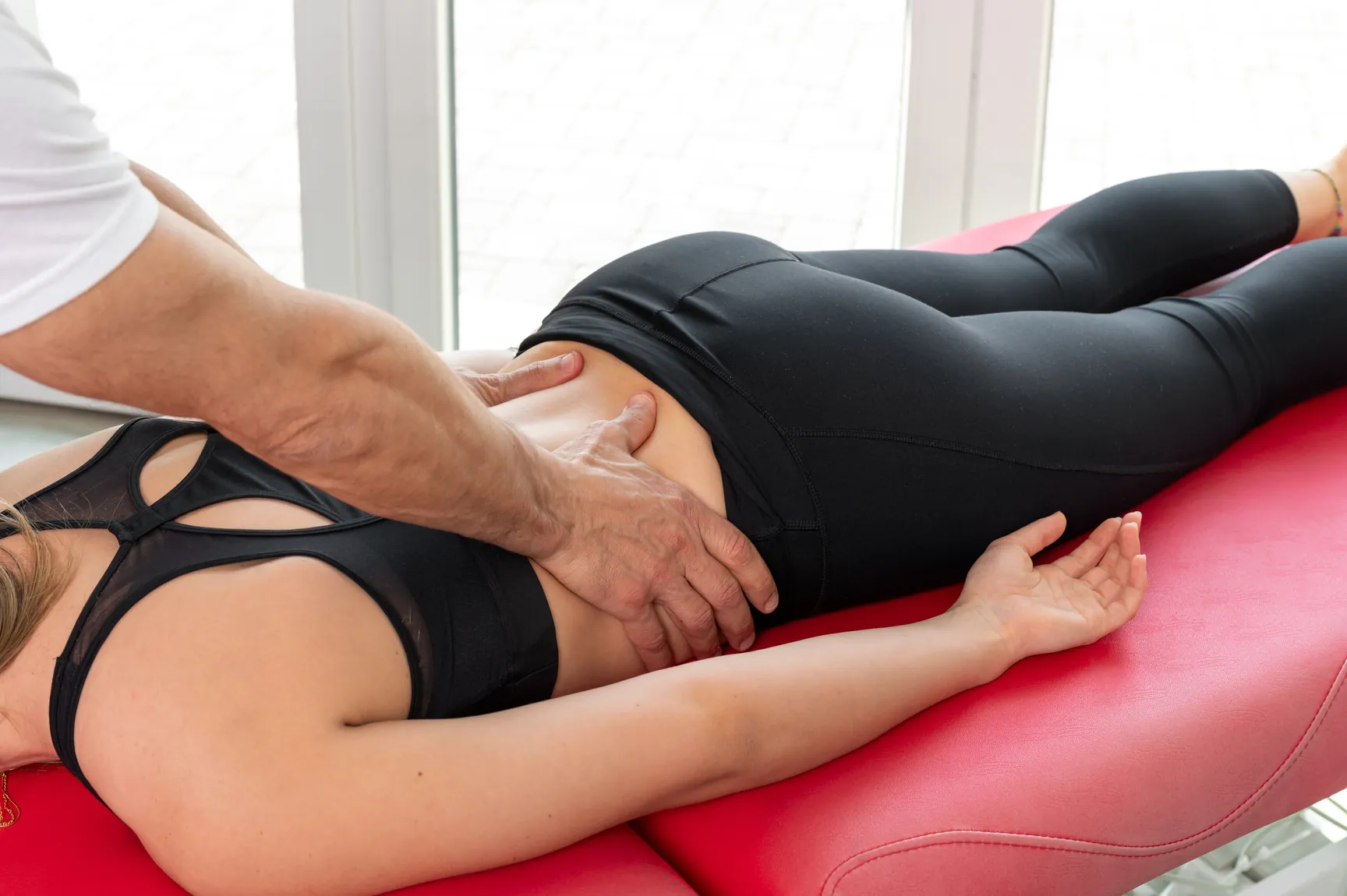
The short version: a herniated disc, also called a slipped or prolapsed disc, is when one of the cushions between the bones in your spine bulges outwards. It can cause back pain, and if it presses on a nerve, pain, tingling or numbness in your leg. Most people get better without surgery. The NHS treatment path starts with staying active, then painkillers, then physiotherapy, with scans and surgery kept for the minority who don't improve.
Slipped, herniated or prolapsed: one condition, three names
Between each bone in your spine sits a disc: a tough outer ring with a softer centre. With a herniated disc, the soft centre bulges or pushes out through the outer ring. Despite the name, nothing slips out of place.
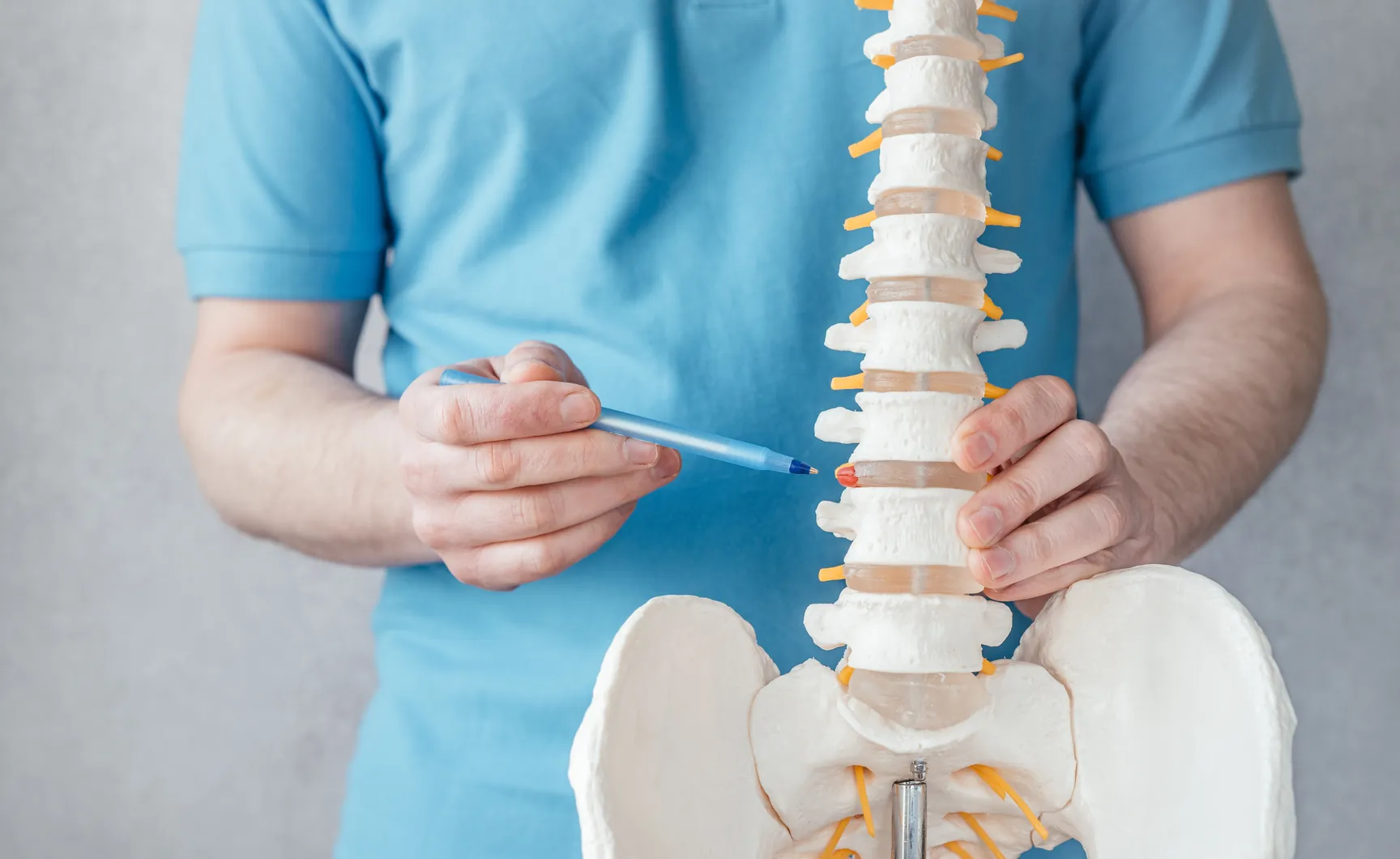
Plenty of people have a bulging disc and never know. The NHS notes that not every slipped disc causes symptoms. It only becomes a problem when it irritates the tissue or nerves around it.
Herniated disc symptoms
The NHS lists:
- lower back pain
- numbness or tingling in your shoulders, back, arms, hands, legs or feet
- neck pain
- problems bending or straightening your back
- muscle weakness
- pain in your buttocks, hips or legs if the disc is pressing on the sciatic nerve
Pain going down one leg? That's sciatica, and a herniated disc is one of its most common causes. Read sciatica symptoms and causes.
What causes a slipped disc
Often there's no single moment it happened. The NHS lists these as making it more likely:
- ageing, as discs naturally lose some of their give
- exercising too hard
- lifting heavy objects the wrong way
- sitting or driving for long periods
- being inactive or overweight
Do you need a scan?
Usually not at first. The NHS says a slipped disc can normally be diagnosed from your symptoms, sometimes with a simple examination such as raising your arms or moving your legs. NICE advises against routine imaging for back pain, partly because scans often show disc bulges in people with no pain at all. An MRI becomes useful if you're not improving and further treatment is being considered.
What helps, in the order the NHS recommends
- 1
Keep moving
Gentle exercise and staying as active as you can, rather than long periods of bed rest.
- 2
Painkillers
Anti-inflammatories such as ibuprofen, taken regularly, and sometimes stronger painkillers for a short time. A pharmacist can tell you what's safe for you.
- 3
Physiotherapy
A physio works out which movements ease your pain and which aggravate it, then builds an exercise plan around that. NICE puts exercise at the centre of treatment, with hands-on techniques only alongside it.
- 4
Injections or muscle relaxants
Sometimes offered by a doctor if pain isn't settling.
- 5
An MRI scan
If symptoms carry on despite treatment.
- 6
Surgery
Only if other treatments haven't worked, or muscle weakness is getting worse.
For stretches you can start at home, see 5 sciatica exercises from NHS guidance. They're gentle NHS movements you can try while you wait for an appointment.
Seeing a physio for a disc
You don't need a GP referral to see a private physio. In London a first appointment usually costs £70 to £130. Tell us your symptoms and a HCPC-registered physiotherapist on our team will match you with someone who treats disc problems regularly.
It's free, and most people hear back within 24 hours.
When to see a GP
The NHS says see a GP if:
- painkillers aren't helping
- the pain isn't getting better after a few weeks
- you have a very high temperature, or feel hot, cold or shivery
- you've lost weight without trying
- there's a swelling in your back
- the pain is worse at night
Herniated disc questions
Is a herniated disc the same as a slipped disc?
Yes. Slipped disc, herniated disc and prolapsed disc are three names for the same thing. The NHS uses "slipped disc", and doctors and scan reports often say "herniated" or "prolapsed". The disc doesn't actually slip out of place. Its soft centre bulges or pushes outwards.
Do I need surgery for a herniated disc?
Rarely. The NHS only suggests surgery if other treatments haven't worked, or if muscle weakness is getting worse. Most people are treated with staying active, painkillers and physiotherapy.
Can a physio help with a herniated disc?
Yes, and physio is one of the main treatments the NHS lists. A physio works out which movements ease or aggravate your pain, builds you an exercise plan around that, and checks for signs you need a GP or a scan instead.
How long does a slipped disc take to heal?
There isn't a fixed timescale, and the NHS doesn't give one. If the pain isn't getting better after a few weeks, or painkillers aren't helping, the NHS says to see a GP.
Related: lower back pain · back pain physios in London compared · private physio costs
Call 999 or go to A&E if you have back pain and:
- numbness around your bottom or genitals
- you can't pee
- you've lost feeling in one or both legs
- you can't control when you pee or poo
- it started after a serious accident, such as a car crash
These can be signs of cauda equina syndrome, which needs treatment within hours.
Sources
- NHS, Slipped disc (last reviewed 24 April 2024). nhs.uk/conditions/slipped-disc
- NICE, Low back pain and sciatica in over 16s (NG59). nice.org.uk/guidance/ng59
- London physio prices: PhysioMatch London survey of 20 clinics, September 2026
This page is general information, not medical advice. If you're worried about your symptoms, speak to a GP, call NHS 111, or in an emergency call 999.