Piriformis syndrome: is it that, or sciatica?
Based on NHS physiotherapy guidance and clinical research.
Reviewed by Harvir Ubhi, HCPC-registered physiotherapist. Last reviewed 28 September 2026.
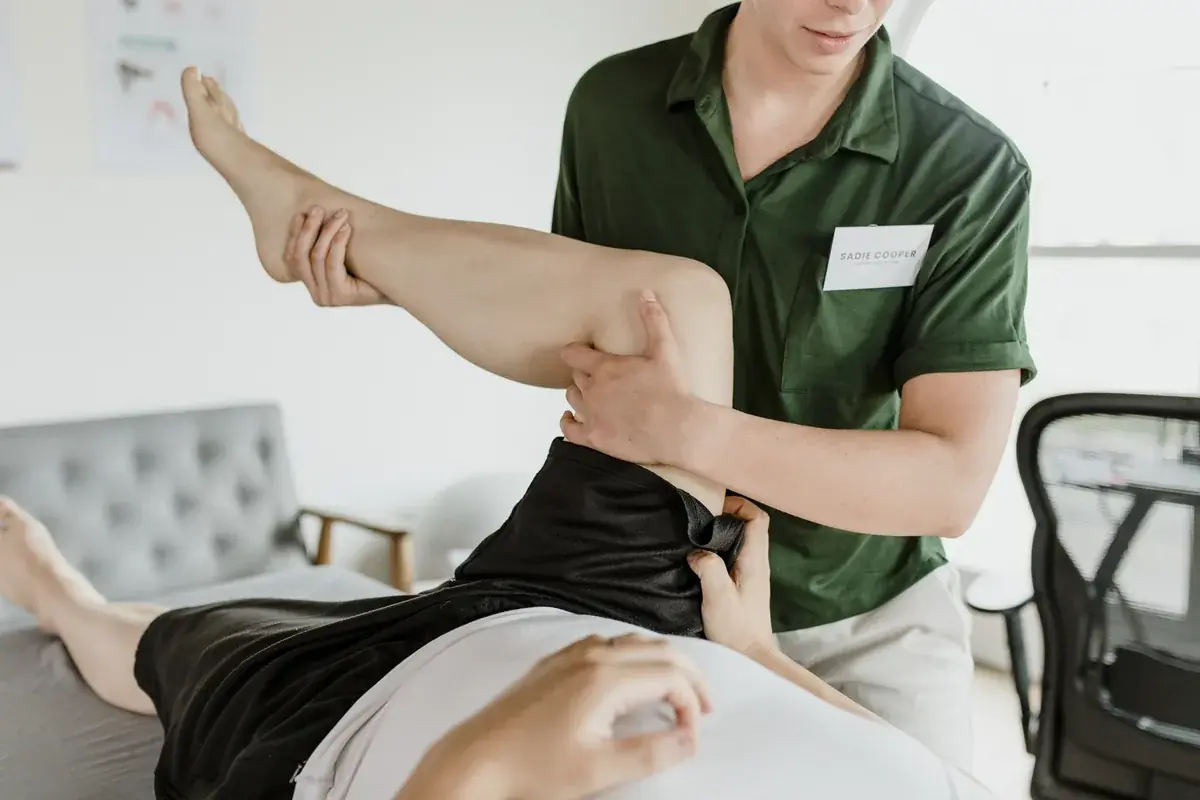
The short version: piriformis syndrome is when a muscle deep in your buttock presses on the sciatic nerve. It causes buttock pain and tingling down the back of your leg, which is why it's easily mistaken for sciatica from the spine. There's no single test for it. Doctors and physios diagnose it by examining you and ruling out a back problem first. Stretching and strengthening are the main treatment, and surgery is very rarely needed.
What piriformis syndrome is
The piriformis is a muscle deep in your buttock that turns your leg outwards. The sciatic nerve, the large nerve that runs down the back of your leg, passes right next to it, and in some people through it. When the muscle tightens or gets irritated, it can squeeze the nerve at that point.
Piriformis syndrome symptoms
NHS Lothian's physio leaflet lists:
- tingling, numbness or burning in the back of your thigh, sometimes down to your foot
- tenderness in your buttock
- a dull ache or burning in your hip, groin, mid-buttock or back of the thigh
- a heavy or tired feeling in your leg
- pain that's worse sitting on a hard chair
Piriformis syndrome or sciatica from your back?
Both irritate the same nerve, so they can feel almost identical. The difference is where the nerve is being squeezed:
Sciatica from the spine
The nerve is irritated in your lower back, most often by a slipped disc. Back pain often comes with it.
Piriformis syndrome
The nerve is squeezed in the buttock. The buttock itself is tender, and sitting on hard surfaces tends to set it off.
That's a guide, not a way to diagnose yourself. The symptoms overlap too much. Getting it wrong matters, because stretching a buttock muscle won't fix a disc problem, and treating a disc won't loosen a tight piriformis. Read more on sciatica symptoms and causes or slipped discs.
Is there a test for piriformis syndrome?
Not one that settles it. There's no accepted gold-standard test, so it's diagnosed by examination and by ruling out other causes first, especially a slipped disc or spinal stenosis in the lower back.
A clinician may use movement tests that stretch the piriformis to see if they bring on your pain. The best known is the FAIR test, where your hip is bent, turned inwards and moved across your body. A positive result points towards the piriformis, alongside everything else they find.
Scans can't reliably show piriformis syndrome. An MRI is mostly useful to rule out a problem in the spine instead.
What helps, in the order it usually happens
- 1
Ease off the trigger
Rest from whatever sets it off, whether that's running, hills or long spells sitting on hard chairs.
- 2
Ice, then heat
An ice pack for 20 minutes at a time to calm it down. Heat helps the muscle loosen before stretching.
- 3
Stretch and strengthen
NHS Lothian's leaflet pairs hip and buttock stretches, each held for 30 seconds, with strengthening work such as bridges and side-lying leg lifts. Rolling your buttock on a tennis ball can also help.
- 4
Painkillers
Paracetamol and anti-inflammatories such as ibuprofen, taken as directed. A pharmacist can tell you what's safe for you.
- 5
Physiotherapy
A physio confirms whether it's the piriformis or your back, then builds your stretching and strengthening plan around what they find.
- 6
Injection
Occasionally a steroid injection near the muscle helps.
- 7
Surgery
Very rarely needed.
Not sure if it's piriformis or sciatica?
That's the question an examination answers. You don't need a GP referral to see a private physio, and in London a first appointment usually costs £70 to £130. Tell us your symptoms and a HCPC-registered physiotherapist on our team will match you with someone who treats sciatica and buttock pain regularly.
It's free, and most people hear back within 24 hours.
Piriformis syndrome questions
Is piriformis syndrome the same as sciatica?
Not quite. Sciatica describes symptoms along the sciatic nerve. It usually comes from the lower back, most often a slipped disc. Piriformis syndrome is one specific cause of those symptoms, where the nerve is squeezed in the buttock instead. The symptoms overlap, but the treatment focus is different.
Can I test for piriformis syndrome myself?
Not reliably. Online self-tests stretch the piriformis to see if it brings on your pain, and that can point towards the muscle. But no test can confirm it on its own, and none can rule out a problem in your back. Clinicians diagnose it by examining you and ruling out other causes first.
Why is it worse when I sit?
NHS Lothian lists sitting on a hard chair as a typical trigger. Sitting puts weight straight through the buttock, where the muscle and nerve are.
Do I need a scan?
Scans can't reliably show piriformis syndrome. Where an MRI is used, it's mainly to rule out a disc problem or narrowing in the lower back that could be causing the same symptoms.
Related: sciatica exercises · sciatica pain relief · sciatica physios in London compared
Call 999 or go to A&E if you have leg or buttock pain and:
- numbness around or under your genitals or bottom
- loss of bladder or bowel control
- severe pain or numbness in both legs
- weakness in both legs that makes it hard to stand
These can be signs of cauda equina syndrome, where the nerves at the base of the spine are compressed. It needs same-day hospital assessment.
Sources
- NHS Lothian and Edinburgh Orthopaedics, Piriformis Syndrome: patient information sheet (v1.0, January 2025). policyonline.nhslothian.scot
- StatPearls, Piriformis Syndrome (NCBI Bookshelf). ncbi.nlm.nih.gov/books/NBK448172
- NHS, Sciatica. nhs.uk/conditions/sciatica
- London physio prices: PhysioMatch London survey of 20 clinics, September 2026
This page is general information, not medical advice. If you're worried about your symptoms, speak to a GP, call NHS 111, or in an emergency call 999.