Is walking good for sciatica?
Based on NHS guidance and NHS physiotherapy advice.
Reviewed by Harvir Ubhi, HCPC-registered physiotherapist. Last reviewed 30 September 2026.
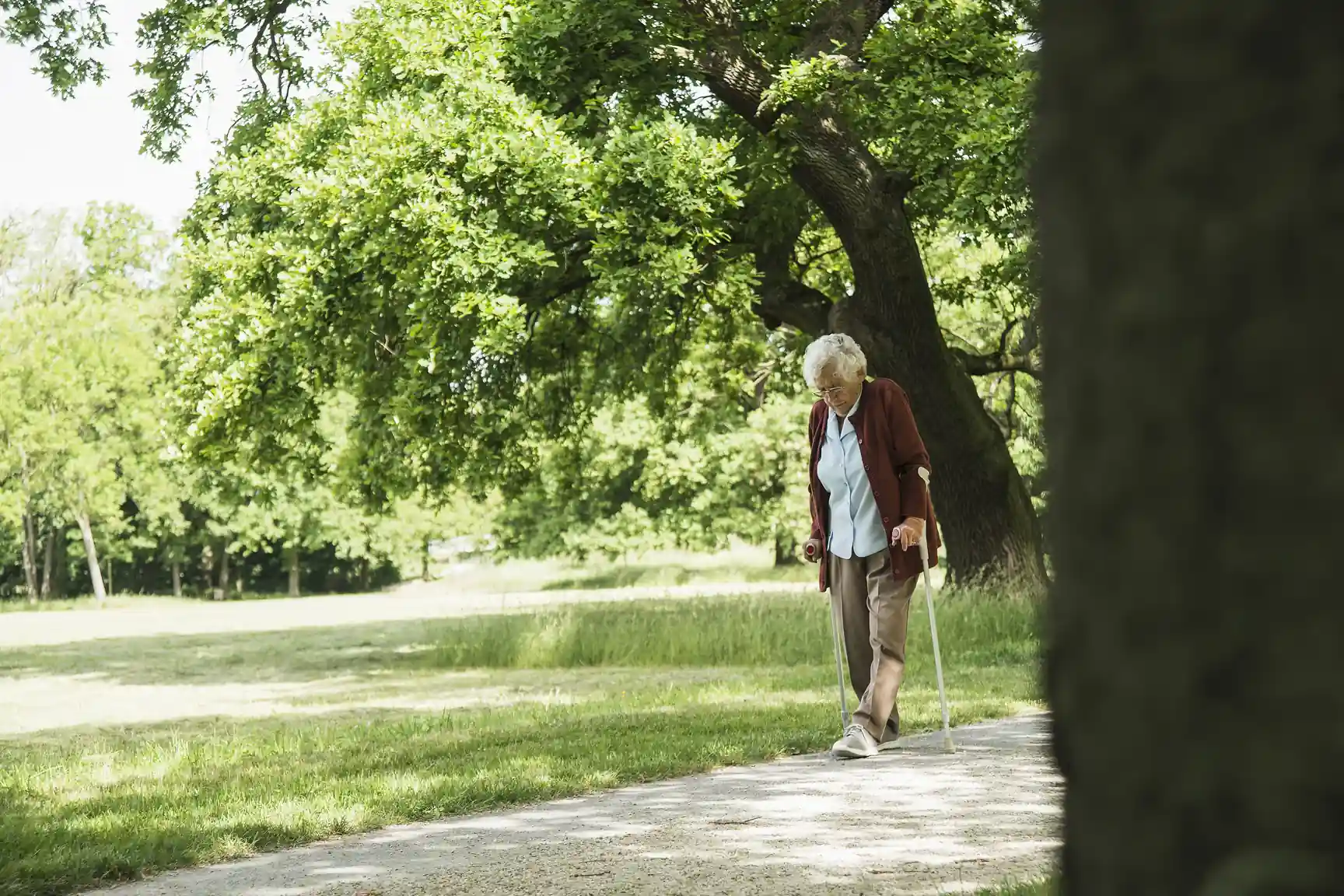
The short version: yes. The NHS advice for sciatica is to keep moving and start gentle exercise as soon as you can, and walking is the easiest way to do both. Start short, even around the house if the pain is bad, and build up a little at a time. If a walk makes your pain clearly worse, cut it shorter rather than giving up.
Why walking helps
The NHS advice for sciatica is to carry on with your normal activities as much as you can, start gentle exercise as soon as you can, and not sit or lie down for long periods. Moving may hurt, but the NHS is clear that it isn't harmful and can help you get better faster.
Walking fits all three. It needs no kit, you can do it in short bursts, and you can stop whenever you need to. The NHS lists walking, alongside swimming, yoga and pilates, as activities that may help ease back pain.
How to walk with sciatica
- 1
Start where you are
If the pain is bad, walk around your home for a few minutes at a time. As it eases, take it outside.
- 2
Keep it short and often
Several short walks are easier to manage than one long one. Guy's and St Thomas' physios suggest breaking activity into smaller steps with rests in between.
- 3
Walk normally
Try not to hold yourself stiffly. Tensing up to protect your back can make the pain worse.
- 4
Add a little at a time
Build up gradually over days, starting from what you managed recently.
- 5
Break up sitting
If you work at a desk, get up and move regularly. Long spells of sitting are one of the things the NHS says to avoid.
If walking makes it worse
Some discomfort while you walk is common. As the Guy's and St Thomas' physios put it, "hurt does not equal harm". If a walk makes your pain clearly worse, go shorter and build up more slowly.
If walking stays painful after a few weeks, or you can only manage a short distance before your leg hurts and you need to stop, see a GP or physio. Leg pain that comes on with walking and eases when you sit or lean forward can have a different cause, such as spinal stenosis, and is worth getting checked.
Want a plan that fits your sciatica?
A physio can work out what's driving your sciatica and tell you how much walking and which exercises are right for you. You don't need a GP referral, and a first appointment in London usually costs £70–£130. Tell us about your symptoms and a HCPC-registered physiotherapist on our team will match you with someone who treats sciatica every week.
It's free, and most people hear back within 24 hours.
Walking with sciatica: questions
Can too much walking make sciatica worse?
It can flare it up if you do much more than you're used to. Some discomfort is normal, but if a walk clearly makes your pain worse, do shorter walks and build up more slowly rather than stopping altogether.
Should I walk during a sciatica flare-up?
Yes, gently. Wirral Community Health and Care NHS Trust suggests walking around your home when the pain is bad, then walking outside, within your limits, as it eases. The NHS advises against lying down for long periods.
My sciatica eases when I walk. Is that normal?
That fits the NHS advice for sciatica: avoid long spells of sitting or lying down, because moving isn't harmful and can help you get better faster.
How far should I walk?
None of the NHS sources set a distance. Start with what you can manage today, even if that's a few minutes, and add a little each day or two.
Is walking better than resting in bed?
Yes. Wirral Community Health and Care NHS Trust says bed rest for more than one or two days isn't beneficial and is no longer recommended.
What's the worst thing you can do for sciatica?
Staying still. The NHS advises against sitting or lying down for long periods, because moving isn't harmful and can help you get better faster.
What's the fastest way to get over sciatica?
There's no shortcut, but the NHS advice gives you the best chance: carry on with your normal activities as much as you can, start gentle exercise early, do regular sciatica exercises and use heat packs. If it isn't improving after a few weeks, see a GP or physio.
Related: how long sciatica lasts · NHS sciatica exercises · sleeping with sciatica · sciatica symptoms
Go to A&E or call 999 if you:
- have sciatica on both sides
- have weakness or numbness in both legs that's severe or getting worse
- have numbness around or under your genitals, or around your bottom (anus)
- find it hard to start peeing, cannot pee or cannot control when you pee, and this is not normal for you
- do not notice when you need to poo or cannot control when you poo, and this is not normal for you
These can be signs of cauda equina syndrome.
Sources
- NHS, Sciatica (last reviewed 3 December 2024). nhs.uk/conditions/sciatica
- NHS, Back pain (last reviewed 5 March 2026). nhs.uk/conditions/back-pain
- Wirral Community Health and Care NHS Foundation Trust, Acute mechanical low back pain. wchc.nhs.uk
- Guy's and St Thomas' NHS Foundation Trust, Low back pain: physiotherapy and exercises (resource 4876/VER2, last reviewed March 2024). guysandstthomas.nhs.uk
- London physio prices: PhysioMatch London survey of 20 clinics, September 2026
This page is general information, not medical advice. If you're worried about your symptoms, speak to a GP, call NHS 111, or in an emergency call 999.