How long does sciatica last?
Based on NHS and NICE guidance.
Reviewed by Harvir Ubhi, HCPC-registered physiotherapist. Last reviewed 30 September 2026.
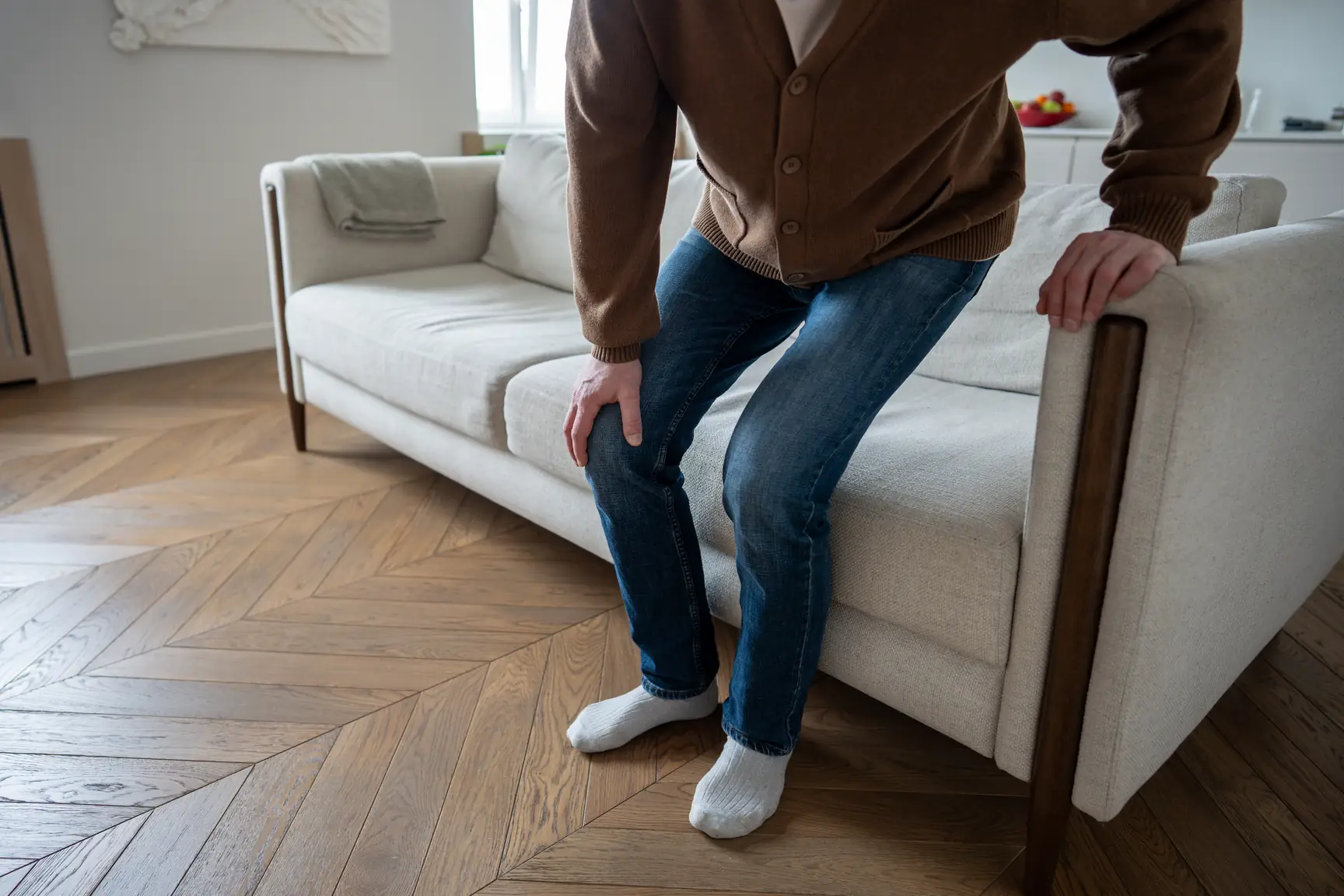
The short version: the NHS says sciatica usually gets better in a few weeks to a few months, though it can sometimes last longer and can come back. Keep moving, because long spells of sitting or lying down don't help. If it hasn't improved after a few weeks, is getting worse, or is stopping you doing normal things, see a GP or a physio.
The usual timeline
For most people, sciatica is a problem of weeks to months, not years. The NHS puts it at a few weeks to a few months. It doesn't give a more exact figure, because it depends on what's causing it.
The most common cause is a slipped disc pressing on the sciatic nerve. Others include narrowing of the spinal canal (spinal stenosis), a vertebra slipping out of place (spondylolisthesis) and back injuries. A physio can usually tell which one is behind yours by examining you.
What helps it settle
- 1
Carry on with normal activities
As much as you can. NICE, which sets NHS treatment guidance, recommends encouraging people with sciatica to keep up their normal activities.
- 2
Don't sit or lie down for long
Even if moving hurts, the NHS says it isn't harmful and can help you get better faster.
- 3
Start gentle exercise early
Anything that gets you moving can help. Walking is a good start: see our guide to walking with sciatica.
- 4
Do regular sciatica exercises
Our NHS-based sciatica exercises take a few minutes a day.
- 5
Heat and painkillers
Hold a heat pack on the painful area, and ask a pharmacist which painkillers are right for you.
More detail: is walking good for sciatica? · NHS sciatica exercises · how to sleep with sciatica · sciatica pain relief
When to stop waiting and get help
The NHS says see a GP if:
- the pain has not improved after trying home treatments for a few weeks
- the pain is getting worse
- the pain is stopping you doing your normal activities
On the NHS, a GP can refer you to physiotherapy, and in many areas you can refer yourself. It's free, but in London the wait can be long: at the end of July 2026, about 1 in 5 adults on NHS physio waiting lists in London had already waited more than 18 weeks. See the wait in your part of London.
Sciatica dragging on?
A physio can find out what's causing your sciatica and give you a plan to get moving again. You don't need a GP referral, and a first appointment in London usually costs £70–£130. Tell us about your symptoms and a HCPC-registered physiotherapist on our team will match you with someone who treats sciatica every week.
It's free, and most people hear back within 24 hours.
Sciatica timeline questions
Can sciatica last for months or years?
It can. The NHS says sciatica usually gets better in a few weeks to a few months, but it can sometimes last longer. If yours has gone on for more than a few weeks without improving, see a GP or physio rather than waiting it out.
Does sciatica come back?
It can. The NHS notes that sciatica can return if you've had it before. A physio can help you work out what's driving yours and what to keep doing once it settles.
How long does sciatica last in the leg?
The leg pain is the sciatica, so the same timeline applies: usually a few weeks to a few months. If you have pain, tingling, weakness or numbness in both legs, that's different: call 999 or go to A&E.
Will resting make it go faster?
No. The NHS advice is not to sit or lie down for long periods. Moving may hurt, but it isn't harmful and can help you get better faster.
Do I need a scan to find out how long mine will last?
Usually not. NICE, which sets NHS treatment guidance, advises against routinely scanning people with sciatica outside specialist care. A GP or physio can usually assess it by examining you.
Go to A&E or call 999 if you:
- have sciatica on both sides
- have weakness or numbness in both legs that's severe or getting worse
- have numbness around or under your genitals, or around your bottom (anus)
- find it hard to start peeing, cannot pee or cannot control when you pee, and this is not normal for you
- do not notice when you need to poo or cannot control when you poo, and this is not normal for you
These can be signs of cauda equina syndrome, which needs treating in hospital straight away.
Sources
- NHS, Sciatica (last reviewed 3 December 2024). nhs.uk/conditions/sciatica
- NICE, Low back pain and sciatica in over 16s: assessment and management (NG59), recommendations 1.1.4 and 1.2.1. nice.org.uk
- NHS England, Community Health Services waiting lists, July 2026, via our NHS physio waiting times page
- London physio prices: PhysioMatch London survey of 20 clinics, September 2026
This page is general information, not medical advice. If you're worried about your symptoms, speak to a GP, call NHS 111, or in an emergency call 999.