Why does my knee click? Causes and when to get it checked
 Medically reviewed by Harvir Ubhi, Chartered HCPC Physiotherapist
A clicking, popping, or cracking knee is one of the most common things people worry about, and the honest answer for most people is that it's completely normal. But not always, and the difference between harmless clicking and clicking that's actually telling you something comes down to one thing: whether it hurts.
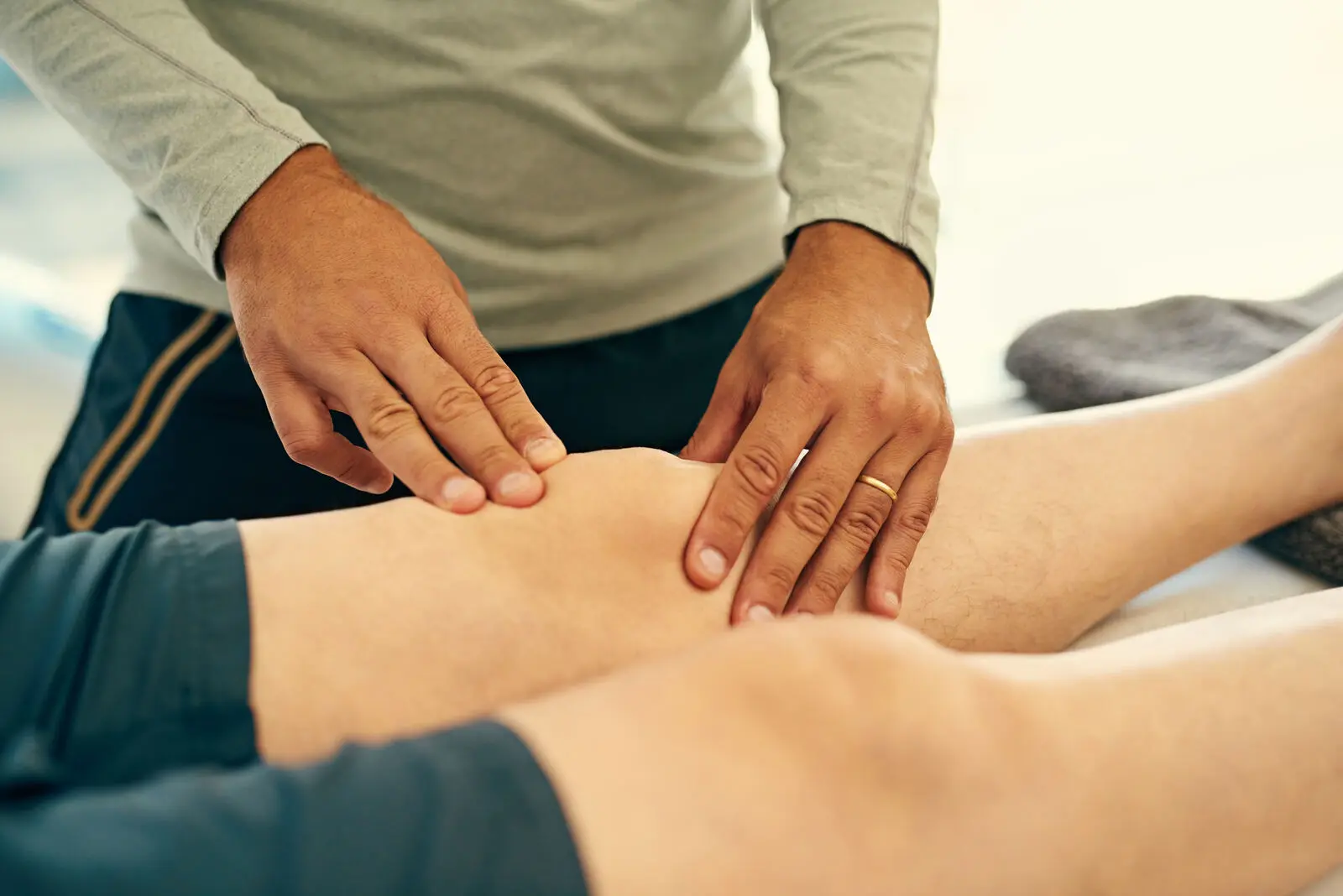
Why knees click
Most clicking comes from one of two harmless sources: small gas bubbles popping inside the joint, similar to cracking your knuckles, or a tendon sliding over a bony prominence and snapping back into place as you move. Neither of these causes any damage.
It's also far more common than most people assume. Studies suggest nearly everyone experiences some degree of knee clicking, and a large 2018 study following more than 3,500 adults over several years found that clicking alone, without pain or swelling, didn't predict a diagnosis of osteoarthritis. In other words: the sound by itself isn't evidence of anything going wrong.
When it's not something to worry about
If your knee clicks but doesn't hurt, moves through its full range normally, and hasn't swollen up, that's the pattern most people fall into. There's genuinely nothing to fix here. Trying to stop a painless click isn't necessary, and there's no evidence doing so prevents anything down the line.
When it's worth a proper look, and physio can actually help
The picture changes when clicking shows up alongside pain, especially around or behind the kneecap. That combination often points to the kneecap not tracking quite straight as the knee bends, usually down to a muscle imbalance or movement pattern rather than anything structurally damaged. A physiotherapist can assess how your knee moves, work out what's pulling it off course, and build a plan to correct it, which is a genuinely different situation to painless clicking that needs no treatment at all.
Swelling, stiffness, a feeling that the knee might give way, or locking where you can't fully straighten or bend it are also reasons to get it looked at properly, particularly if any of it started after an injury rather than gradually on its own. That combination can point to something inside the joint, such as a torn meniscus or ligament, which needs a proper assessment rather than guesswork.
Get it checked the same day if
Seek urgent assessment, at A&E or an urgent care centre, if clicking follows an injury involving a loud pop, rapid swelling within an hour or two, or if you can't put weight on the leg at all. Those signs point toward a more significant injury that needs same-day attention, not a routine appointment.
Frequently asked questions
Is it normal for knees to click with no pain?
Yes, very. Studies suggest almost everyone experiences some knee clicking at some point, and a large 2018 study following over 3,500 adults found that clicking alone, without any pain or swelling, doesn't predict arthritis. If it doesn't hurt and your knee moves normally, it's usually just background noise, not a sign something's wrong.
Does knee clicking mean I have arthritis?
Not by itself. Clicking without pain or swelling hasn't been shown to diagnose osteoarthritis on its own, even though it's tempting to assume the worst. It's clicking combined with pain, swelling, or stiffness, not the sound alone, that's actually worth getting assessed.
Can a physiotherapist help with a clicking knee?
If the clicking comes with pain, especially around or behind the kneecap, a physio can often help by identifying and correcting whatever movement pattern or muscle imbalance is causing the kneecap to track slightly off course. Painless clicking on its own usually doesn't need any treatment at all.
When should I get a clicking knee checked?
Get it checked if the clicking comes with pain, swelling, stiffness, a feeling that the knee might give way, or locking where you can't fully bend or straighten it, particularly if any of that followed an injury rather than appearing out of nowhere.
Clicking with pain, not just noise?
If your knee clicks and hurts, or feels unstable, tell us your symptoms and we'll match you with the right London physio to find out what's actually going on. Free, no obligation.
Get matched free →Sources: 2018 study of knee crepitus published in Arthritis Care & Research; general orthopaedic and physiotherapy guidance on painless vs. painful knee crepitus. Fetched and checked 18 September 2026.