Knee pain: causes by location, relief and treatment
Based on NHS guidance and NHS physiotherapy leaflets.
Reviewed by Harvir Ubhi, HCPC-registered physiotherapist. Last reviewed 28 September 2026.
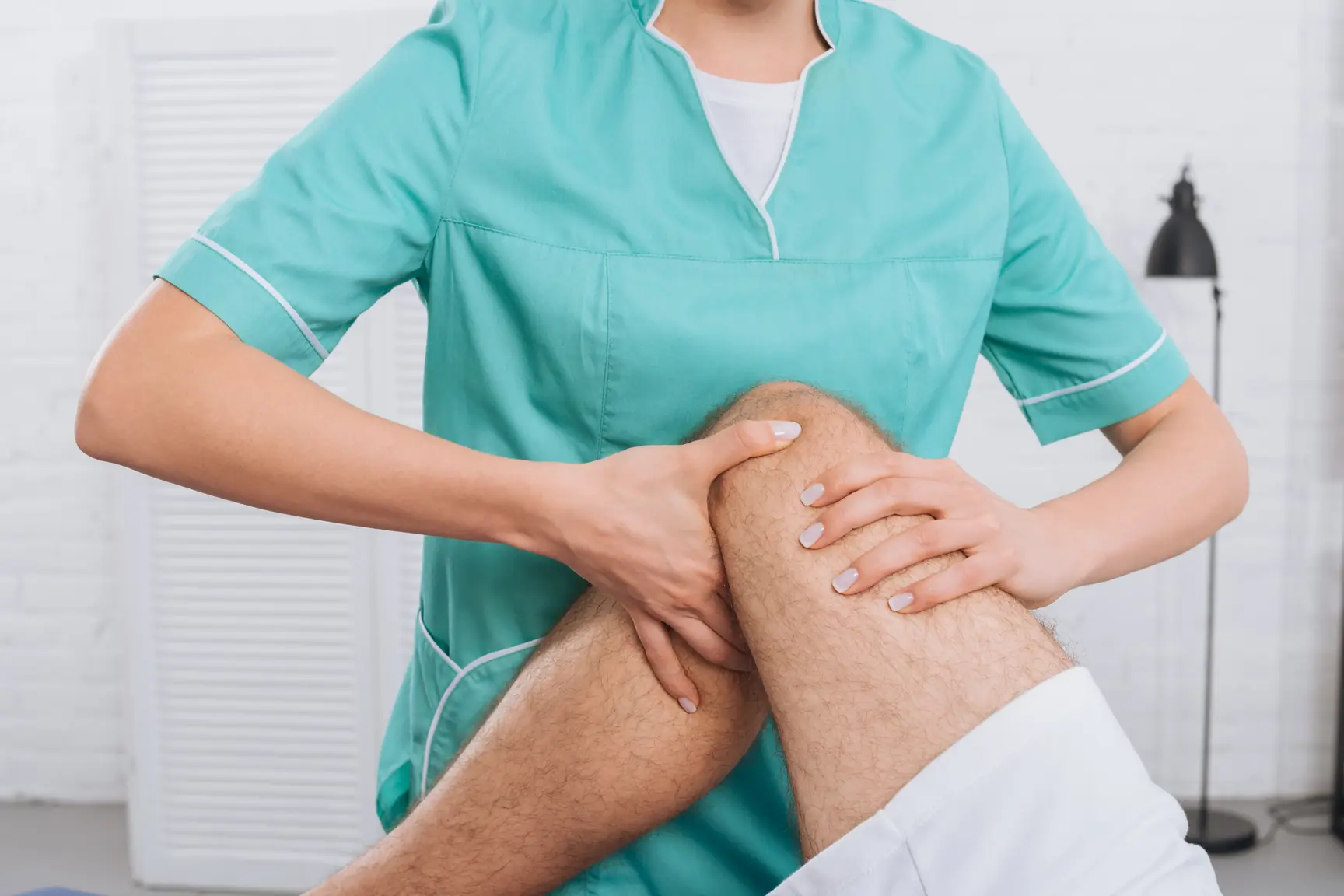
The short version: where your knee hurts, and what sets it off, is the best clue to the cause. Many knee problems settle with rest, ice and painkillers. If it hasn't improved within a few weeks, see a GP or physio. Get urgent help if you can't put weight on it, it's badly swollen, or it's hot and red with a temperature.
Knee pain symptom checker: where does it hurt?
Use this as a knee pain location chart. It's a guide, not a diagnosis: a GP or physio can examine your knee and tell you for sure.
| Where it hurts | What you notice | Possible cause |
|---|---|---|
| Front of the knee, around or behind the kneecap | Worse on stairs, squatting, kneeling or after sitting for a long time | Runner's knee (patellofemoral pain) |
| Just below the kneecap | Pain between the kneecap and the top of the shin, from running or jumping | Tendonitis |
| Just below the kneecap, in a teenager or young adult | Pain below the kneecap | Osgood-Schlatter disease |
| Inside of the knee | An ache that builds over time, or pain after a twist | Osteoarthritis, an inner knee ligament (MCL) injury, a meniscus tear, or bursitis |
| Back of the knee | A soft lump, sometimes with stiffness and clicking | Baker's cyst |
| Both knees | Pain and stiffness with mild swelling | Osteoarthritis |
| The whole knee feels unstable | It gives way or won't straighten | A torn ligament, tendon or meniscus |
| Swollen, warm and red | Worse when you kneel or bend | Bursitis |
Painful clicking is different from harmless clicking. If your knee clicks without pain, read why does my knee click?
Inside knee pain and back of knee pain
Pain on the inside of the knee (medial knee pain) most often comes from osteoarthritis, a strain of the ligament on the inner side of the knee (the MCL), a tear in the cartilage cushion called the meniscus, often after a sudden twist, or bursitis, where a small fluid-filled cushion on the inside of the knee becomes inflamed.
Pain at the back of the knee with a soft lump is often a Baker's cyst, a fluid-filled swelling usually linked to wear or damage in the knee. It's most common between 35 and 70. Pain, swelling, warmth or redness in the calf can also be a blood clot (DVT), so read the urgent signs at the bottom of this page.
Runner's knee: pain around the kneecap
Runner's knee, or patellofemoral pain, is pain at the front of the knee, around or behind the kneecap, without damage inside the joint. It's very common and affects men and women of all ages, not only runners. Stairs, squatting, kneeling, walking, running and sitting with your knees bent for a long time all tend to set it off. Knees can also feel stiff, click, grind or catch.
It often follows a sudden jump in activity, weak hip and thigh muscles, the way you move your hips, knees or feet, or an old knee injury. It's diagnosed by examination: X-rays and scans can't show it. Physiotherapy is usually the first treatment, and Whittington Health's NHS physio team gives these exercises as examples:
- Bridge. Lie on your back with your knees bent. Lift your hips slowly until your thighs line up with your body, then lower back down one part of your spine at a time.
- Side-lying leg lift. Lie on your side with your head supported and your bottom leg bent. Lift your top leg to about 30 degrees, keeping your foot level and your thigh in line with your body.
- Wall slides. Stand with your back against a wall and your feet in front of you. Slide down until your thighs are level with the floor (knees at 90 degrees), then slide back up. Keep your knees in line with your feet.
- Single leg balance. Stand on one leg and hold for 30 to 60 seconds. Do this 3 times.
There's no quick fix. Resting helps for a while, but lasting improvement comes from getting stronger, and that takes months, not weeks. Flare-ups are normal: ease off, then build back up. A physio can check how you move and tape the knee for short-term relief.
Knee pain relief and treatment
- 1
Take the weight off
Put as little weight on the knee as you can at first.
- 2
Ice
An ice pack or bag of frozen peas wrapped in a towel for up to 20 minutes every 2 to 3 hours.
- 3
Painkillers
Paracetamol, or ibuprofen gel or tablets. A pharmacist can tell you what's safe for you.
- 4
Physiotherapy
Exercises to strengthen the muscles around the knee and hip, matched to what's causing your pain. Many areas let you refer yourself to NHS physio.
- 5
GP treatment
A GP may prescribe medicine or physiotherapy, or refer you for a scan or to a specialist, which can include surgery.
Seeing a physio for knee pain
You don't need a GP referral to see a private physio. In London a first appointment usually costs £70 to £130. Tell us where your knee hurts and a HCPC-registered physiotherapist on our team will match you with someone who treats knee pain regularly.
It's free, and most people hear back within 24 hours.
When to see a GP
The NHS says you should start to feel better within a few days. See a GP if knee pain hasn't improved within a few weeks.
Knee pain questions
Why does my knee hurt when I bend it?
Pain when bending, squatting or kneeling is typical of runner's knee (pain around the kneecap). If the knee is also warm, red and swollen, it may be bursitis. Use the symptom checker above, and see a physio if it isn't settling.
What causes knee pain in women?
The causes in the checker above apply to everyone. Runner's knee, one of the most common, affects men and women of all ages and activity levels, not just runners.
What's the best painkiller for knee pain?
The NHS suggests paracetamol, or ibuprofen gel or tablets. A pharmacist can tell you which is safe for you, especially if you take other medicines or have other health conditions.
What's the fastest way to relieve knee pain?
For a strain, NHS self-care usually brings some relief within a few days: keep weight off it, use ice and take painkillers. For runner's knee there's no quick fix: rest eases it for a while, but the lasting improvement comes from strengthening, and that takes months rather than weeks.
Do I need a scan for knee pain?
Often not. Runner's knee is diagnosed from your symptoms and an examination, and X-rays and scans can't show it. If a GP thinks you need one for another cause, they can refer you for a scan or to a specialist.
Related: why does my knee click? · hip pain · shin splints · hamstring strain
Get urgent help
Call 999 if you have leg pain or swelling and you're also breathless or have chest pain. It can be a blood clot that has travelled to the lungs.
Call NHS 111 or get an urgent GP appointment if:
- your knee is very painful, or you can't move it or put weight on it
- it's badly swollen or has changed shape
- it locks, gives way, or clicks painfully
- it's hot and red and you have a high temperature
- your calf or the back of your knee suddenly becomes more painful, swollen, warm or red
Sources
- NHS, Knee pain (last reviewed 21 December 2023). nhs.uk/conditions/knee-pain
- Whittington Health NHS Trust, Patellofemoral joint pain factsheet (published 6 August 2025). whittington.nhs.uk
- NHS, Baker's cyst (last reviewed 26 June 2025). nhs.uk/conditions/bakers-cyst
- Cleveland Clinic, Inner (medial) knee pain. my.clevelandclinic.org
- London physio prices: PhysioMatch London survey of 20 clinics, September 2026
This page is general information, not medical advice. If you're worried about your symptoms, speak to a GP, call NHS 111, or in an emergency call 999.