Achilles tendonitis: symptoms, exercises and recovery time
Based on NHS guidance and NHS physiotherapy leaflets.
Reviewed by Harvir Ubhi, HCPC-registered physiotherapist. Last reviewed 28 September 2026.
The short version: Achilles tendonitis is pain, stiffness and swelling in the tendon at the back of your heel, usually worst first thing in the morning. It doesn't get better with rest alone. A daily calf-strengthening programme is the main treatment, and it usually takes 3 to 6 months. If you felt a snap or like someone kicked your heel, go to A&E.
What is Achilles tendonitis?
Your Achilles tendon is the biggest and strongest tendon in your body. It joins your calf muscles to your heel bone and lets you rise onto tiptoes. Achilles tendonitis happens when the tendon can't keep up with the strain put on it, so it gets small amounts of damage that it keeps trying to repair. You'll also see it called tendinitis, tendinosis or tendinopathy. They all mean the same thing.
Symptoms
- stiffness around the tendon, worst in the morning or after resting
- pain that's worse during or after exercise
- swelling, tenderness when you squeeze the tendon, and mild heat
- sometimes a tender lump, or a clicking feeling when you move your ankle
- loss of strength and movement around the ankle and foot
Some people find the pain eases once they're warmed up, then comes back worse afterwards.
What causes Achilles tendonitis
It's more common from 30 onwards, in men, and in sports with lots of running, like football, tennis, badminton and distance running. It affects non-athletes too. Risk goes up with:
- tight or weak calf muscles
- carrying extra weight, or having diabetes
- standing for long periods, or being inactive
- unsuitable or worn-out footwear
- smoking, or inflammatory arthritis
Common training errors: running too far or too hard, increasing distance too quickly, too much hill running, and not varying your training.
Achilles tendonitis treatment
- 1
Keep active, differently
Rest alone won't fix it. Keep fit with swimming, cycling or running in water while the tendon settles.
- 2
Ice or heat, and painkillers
Ice wrapped in a damp tea towel for up to 20 minutes, up to 4 times a day or after exercise. Paracetamol or anti-inflammatories like ibuprofen. A pharmacist can tell you what's safe for you.
- 3
Calf stretches
The two stretches below, on both legs.
- 4
Calf-strengthening programme
The exercises below are the main treatment. Oxford's NHS physios call the lowering exercises the gold standard.
- 5
Physiotherapy
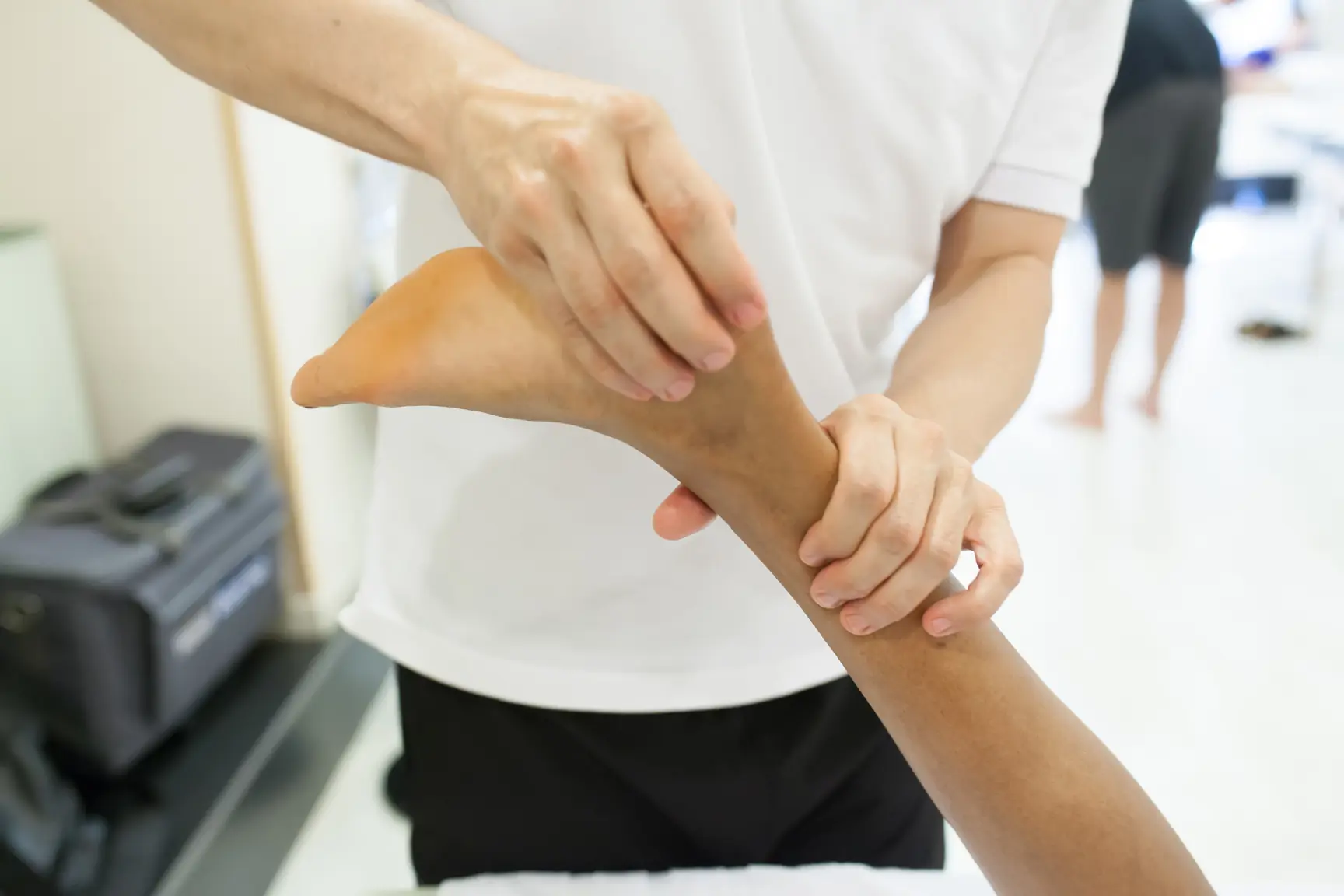
A physio guides and progresses the programme, and may add hands-on treatment.
- 6
If that doesn't work
Options include shoe inserts from a podiatrist, shockwave therapy, dry needling, some types of injection and, as a last resort, surgery. Oxford's NHS team doesn't recommend steroid injections for it.
Achilles tendonitis exercises from an NHS programme
This is Oxford University Hospitals' NHS programme. Do it every day for at least 12 weeks, and move to the next phase when the current one feels easy.
- If it's too sore to start: holds. Holding a rail, stand on a step with your heels over the edge, not letting them drop below it. Hold for 45 seconds, rest 1 minute, and repeat 5 times. Do it with your knees straight and slightly bent, then on one leg as it gets easier.
- Phase 1: both legs. Stand on both feet. Rise onto tiptoes using your good leg, shift your weight onto your sore leg, and lower slowly, using the good leg to help if you need to. 3 sets of 15, twice a day, with knees straight and then slightly bent.
- Phase 2: one leg. Rise onto tiptoes on both feet, lift your good leg, and lower on the sore leg alone. 3 sets of 15, twice a day, knees straight and bent.
- Phase 3: heel drops off a step. Stand with your heels over the edge of a step. Rise using your good leg, then lower on the sore leg until your heel drops below the step. 3 sets of 15, twice a day, knees straight and bent. Wear a rucksack with books in it to make it harder.
Calf stretches: with your hands on a wall and one foot planted flat behind you, lean forwards until you feel a stretch in the back of that calf. Do it once with the back knee straight and once with it bent. Hold each for 30 seconds to 1 minute, and keep your heel on the floor.
How much pain is OK? Expect 3 or 4 out of 10 while you do the lowering exercises. Don't go above 4. If you do, or your morning stiffness starts lasting longer, cut the repetitions until it settles. A physio can judge when you're ready to move up a phase.
Seeing a physio for your Achilles
You don't need a GP referral to see a private physio. In London a first appointment usually costs £70 to £130. Tell us about your heel and a HCPC-registered physiotherapist on our team will match you with someone who treats tendon and running injuries regularly.
It's free, and most people hear back within 24 hours.
When to get help
NHS inform says contact a healthcare professional, such as a GP or physio, if your symptoms haven't improved within 12 weeks or are getting worse.
Achilles tendonitis questions
How can I cure Achilles tendonitis fast?
There's no overnight cure, and resting alone won't fix it: NHS inform says Achilles tendinopathy doesn't improve with rest. The fastest route is the calf-strengthening programme below, done every day. Morning stiffness is usually the first thing to improve.
How long does Achilles tendonitis take to heal?
Usually several months. Oxford's NHS physios say the exercise programme takes 3 to 6 months to make a big difference, and about 70% of people are back to their sport around the 3-month mark. If you haven't improved within 12 weeks, NHS inform says to contact a healthcare professional.
Can I keep running with Achilles tendonitis?
There's no evidence running will cause more harm if you only have a little discomfort, but it can slow your recovery. Swimming, cycling or running in water keep you fit while the tendon settles.
What shoes or insoles help Achilles tendonitis?
Old or worn trainers are one of the training errors linked to it. Oxford's NHS physios suggest replacing running shoes every 300 to 500 miles. If treatment isn't working, a podiatrist can assess you for shoe inserts.
Can the exercises make my tendon snap?
No. Oxford's NHS leaflet says there's no evidence the tendon is at risk of rupture while doing these exercises. Some extra pain at first is expected.
Related: plantar fasciitis · shin splints · ankle keeps giving way
Go to A&E or a minor injuries unit if you might have ruptured it
- sudden pain in your heel or calf
- it felt like someone hit or kicked the back of your leg, but nobody was there
- you heard a snap or pop
- you can't push off properly, stand on tiptoes or climb stairs
The pain can settle to a dull ache quickly, so don't wait for it to get worse before getting it checked.
Sources
- Oxford University Hospitals NHS Foundation Trust, Achilles Tendinopathy: Advice and Management (November 2024). ouh.nhs.uk
- NHS inform, Achilles tendinopathy (updated 22 September 2026). nhsinform.scot
- Cambridge University Hospitals NHS Foundation Trust, Achilles tendon rupture: management and rehabilitation. cuh.nhs.uk
- London physio prices: PhysioMatch London survey of 20 clinics, September 2026
This page is general information, not medical advice. If you're worried about your symptoms, speak to a GP, call NHS 111, or in an emergency call 999.