Boxer's knuckle: symptoms, causes and treatment
 Medically reviewed by Harvir Ubhi, Chartered HCPC Physiotherapist
Boxer's knuckle sounds like it should be the same thing as a boxer's fracture, and the names get confused constantly, but they're different injuries. A boxer's fracture is a broken bone. Boxer's knuckle is a torn tendon, specifically the ligament that keeps your extensor tendon sitting centred over the knuckle so you can straighten your finger properly. Same kind of impact causes both, completely different structure gets damaged.
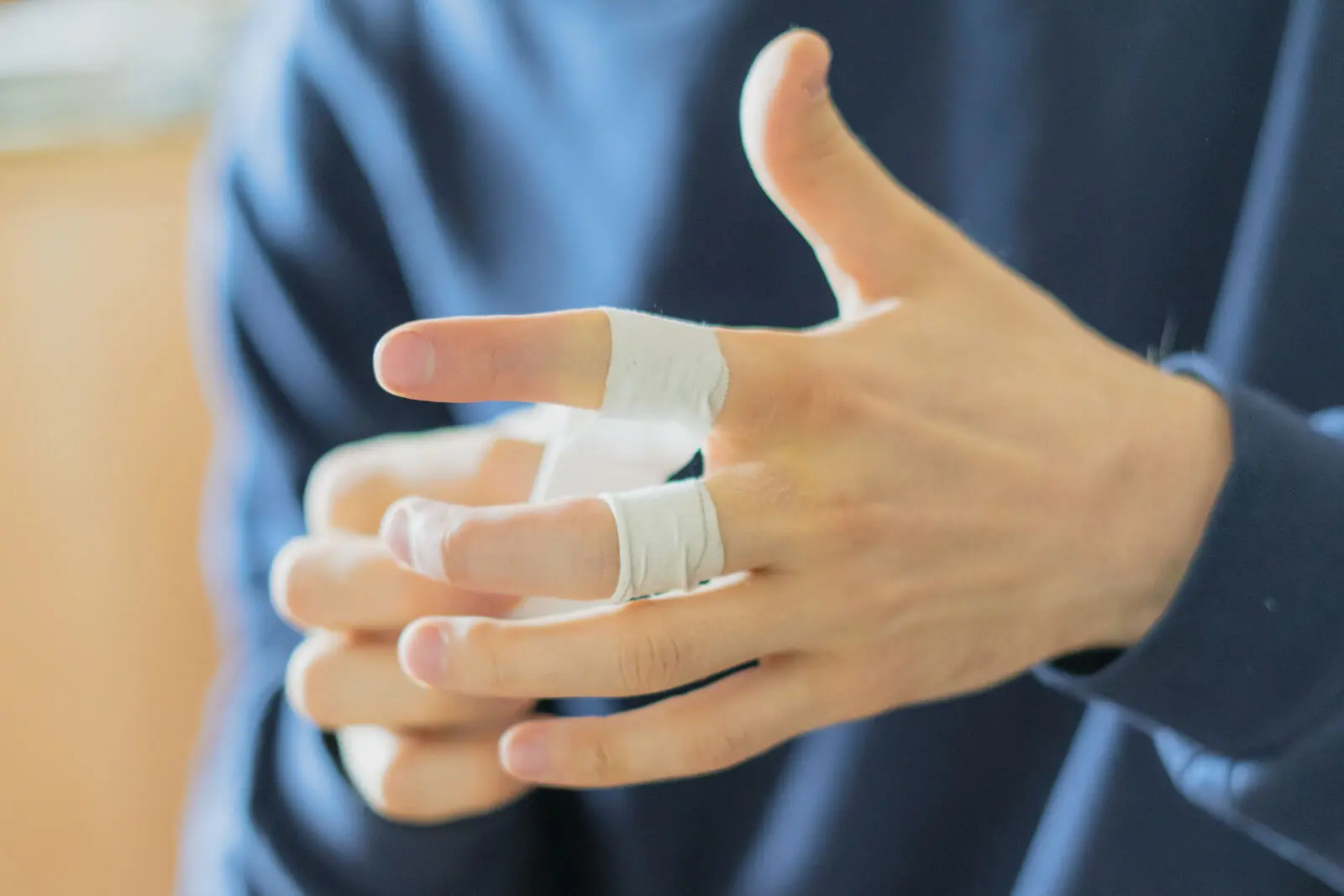
What causes it
The sagittal band is a band of tissue that runs across the top of each knuckle, holding the extensor tendon in place as the finger bends and straightens. A direct blow to the knuckle, most commonly from punching something or someone, can partially tear or fully rupture it. It doesn't always take a hard hit either; even a low-energy movement like forcefully flicking a finger can cause the same injury in a band that's already been weakened.
Symptoms
Pain and swelling sit over the knuckle itself. The main giveaway that distinguishes it from a straightforward sprain is difficulty fully straightening the finger, alongside a snapping or shifting feeling over the top of the knuckle as you move from a straight finger to a bent one.
In more obvious cases, the extensor tendon actually slips visibly to one side of the knuckle when you make a fist, since the torn band can no longer hold it centred, then shifts back as you straighten the finger again. That instability, more than the pain itself, is often what makes people realise something is actually torn rather than just bruised.
How it's treated
Mild or early injuries are often managed without surgery: a splint to keep the finger stable while the band heals, changes to avoid reinjuring it, and hand therapy once the initial pain and swelling have settled to restore full movement and strength.
More severe tears, or cases where the tendon keeps slipping out of place and won't stay centred with conservative treatment, often need surgical repair. After surgery, recovery follows distinct stages: a protective splint for roughly six weeks, controlled movement inside that splint for the first month, active motion once it comes off, then a gradual build back to normal use and heavier tasks over the following two to three months. Full strength and the fine finger control needed for things like typing or gripping tools is usually back by three to six months.
Get it checked the same day if
Seek urgent assessment at A&E or an urgent care centre if the injury happened punching someone in the mouth and there's a puncture wound or broken skin, which risks a serious hand infection known as a fight bite. The same applies if you can't move the finger at all, or there's an obvious deformity.
Frequently asked questions
Is boxer's knuckle a broken bone?
No, and this is the most common mix-up. Boxer's knuckle is a tear of the sagittal band, a ligament that runs across the top of the knuckle and keeps the extensor tendon centred so it can straighten your finger properly. Boxer's fracture is a genuinely different injury, a break in the fifth metacarpal bone. Both come from the same kind of impact, a punch or a direct blow to the knuckle, which is exactly why people confuse the two.
What does boxer's knuckle feel like?
Pain and swelling centred over the knuckle, difficulty fully straightening the affected finger, and a distinct snapping or shifting sensation over the top of the knuckle as you move it from straight to bent. In more noticeable cases, you can actually see or feel the tendon slip off to one side of the knuckle when you make a fist, then pop back as you straighten the finger.
Can boxer's knuckle heal without surgery?
Mild or early cases can improve with splinting to keep the finger stable, activity changes, and hand therapy to restore movement and strength once the initial injury has settled. More severe tears, or ones where the tendon keeps slipping out of place and won't stay put, often need surgical repair, followed by a structured hand therapy programme afterwards.
How long does recovery from boxer's knuckle take?
For surgically repaired cases, a protective splint is typically worn for around six weeks. Hand therapy after that follows stages: controlled movement inside the splint for the first month, active motion once the splint comes off, a gradual return to normal use, then heavier tasks from around two to three months. Full strength and fine control are usually back by three to six months, similar in shape to the recovery timeline for a boxer's fracture, just a different structure healing.
Not sure if it's a fracture or a tendon injury?
If you're past the initial injury and want a physiotherapist to guide the hand therapy side of recovery, tell us what happened and we'll match you with the right London physio. Free, no obligation.
Get matched free →Sources: clinical reference material on sagittal band injuries (boxer's knuckle) from Physiopedia and peer-reviewed hand surgery literature. NHS patient information doesn't cover this specific injury, unlike the more common boxer's fracture. Fetched and checked 18 September 2026.